2011 census data
Background
The UK Census takes place every 10 years. The last census day was 27th March 2011. The ONS collate the data for England & Wales and carefully adjust it to provide statistically accurate and complete data that nonetheless protects the confidentiality of respondents. The main release of data to a detailed level of geography was made in February 2013.
We have now produced derived variables at postal sector level which can be readily integrated into any FastStats system that includes UK post codes. These variables are useful demographic indicators for segmentation, profile, model, cluster tasks.
The ONS provides the following summary information:
- The population of the UK on census day, 27 March 2011, was 63.2 million; the largest it had ever been.
- The estimated population of England was 53.0 million people, 5.3 million people in Scotland, 3.1 million people in Wales and 1.8 million people in Northern Ireland. Further details of UK population estimates accompanied the first release of UK population statistics published on 17 December 2012.
- The number of households in the UK on census day was 26.4 million.
- There were 22.1 million households in England, 2.4 million households in Scotland, 1.3 million in Wales and 0.7 million in Northern Ireland.
- The number of people living in households in the UK on census day was 62.1 million.
- The average household size in the UK was 2.3 people per household, compared to 2.4 in 2001.
- The number of people living in households in the UK increased by 7.5 per cent since 2001, whilst the number of households has increased by 8 per cent resulting in a decrease in average household size for the UK.
- Two people households accounted for the largest number of households in the UK, at 9.0 million households (30 per cent of all households with usual residents).
- The average UK population density was 261 people per square kilometre; an increase of 7 per cent since 2001 when it was 244 people per square kilometre.
More details of the census and data processing methodologies can be found on the ONS website: ons.gov.uk/census
Unfortunately Scotland and Northern Ireland have their own census produced by different agencies to different timetables. Currently (May 2013) no detailed data is available for Scotland and the data for NI is not yet referenced to postal sector level. Most of the census questions were the same so hopefully at some point, unified UK wide data by postal sector will be made available.
Key statistics
The full list of census Key Statistics is at nomisweb.co.uk/census/2011/key_statistics
The raw Key Statistics data takes the form of frequency counts for each answer category for each geographical unit along with the applicable unit total: number of households, number of adults, number of adults under 65 etc. Percentages are derived from these counts and totals.
Derived datasets
We have extracted selected data from the Key Statistics (KS) that might be most useful for marketing data analysis and modelling. In some cases we have combined base categories into more useful summaries and ratios but most follow directly from the KS.
The raw counts and percentages have been manipulated into forms that are readily usable as selector variables in FastStats but hopefully still expose sufficient information for general purpose analysis.
Details of the FastStats variables and the KS source data are given in the accompanying spreadsheet.
Postal sector semi-deciles variables
The relevant KS variables have been transformed into postal sector based semi-deciles (PSDs).
For example with Accommodation Type the raw data will have information equivalent to:
CV34 4 Detached (5%), Semi-detached (5%), Terrace (40%), Flat (50%)
For our analysis we want to transform this to estimate an individual's house type from their postal sector. To do this we have produced postal sector semi deciles (PSD) for each of the relevant answer categories.
In this example CV34 4 is categorised in the 3rd PSD for Flat i.e. if all the postal sectors in the country are ranked by proportion of flats then CV34 4 is in the top 10-15% band. 10% of postal sectors have a higher proportion of flats but 85% have a lower proportion.
Similarly CV34 4 is 4th PSD for Terrace, 16th for detached and 18th for semi-detached.
Evidently most people in CV34 4 live in flats or terrace housing. So in our analysis and modelling we can group residents of CV34 4 with people who live in other parts of the country that have a similar house type PSDs.
Another way of looking at it is that the postal sectors with similar PSDs form a cluster.
PSD variables have been calculated for each selected KS answer category.
The descending semi-deciles divide the postal sectors into 5% bands from highest rank 01 to lowest rank 20.
Predominant category variables
Another simpler strategy is to assign the postal sector the predominant category (PC). In the above example CV34 4 is assigned "Flat" for house type. This is a simple majority vote. In this case it says something about the area but note that 50% of the housing is other types.
The psd captures more information
PC variables have been calculated for each applicable KS answer category.
The categories are those applicable to the question. In some cases smaller categories have been merged. For example "Civil Partnership" has been merged with "Married".
FastStats integration
The derived census variables can be linked into any FastStats system that includes a UK post code. FastStats includes mapping functions to extract postal sectors in the correct format to reference the census tables.
In theory the data could be loaded as part of the data model in Designer, or as an "Import Data" virtual variable or using Combine Categories based on postal sector. We've decided that a lookup table specified from Designer is the best approach.
FastStats Designer
Ideally the census tables are appended to the data model as "query time lookups". The advantage is that the loaded data is then only based on the number of postal sectors (~8000) so the .DAT data files are less than 400kb in total.
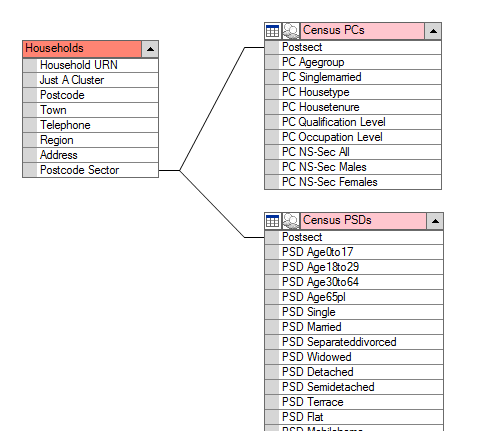
It is important to set the correct category type for variables. All PSDs are descending. PC Qualification Level is ascending, PC SingleMarried is nominal, all other PC variables are descending. Remember that you can multi-select to set the Category type for multiple variables at a time. The data is included as part of the FastStats Designer Training Data Provider.
To add the data: Add a new Database Data Source. Choose the FastStats Training Database as the data provider. The tables are named Census PCs and Census PSDs. These tables can be added to the table relationship diagram and variable data types set in Define Variables.
FastStats analysis
The derived census PSD and PC variables are selectors and hence readily usable in profiles, models, clusters etc.
Remember that the data is derived from postal sector so all people in the same postal sector are categorised with the same PSD and PC category.
User derived datasets
We have extracted the KS data that we thought was most generally applicable to marketing and derived segments using our chosen methodology. The census data is freely accessible for download from:
nomisweb.co.uk/census/2011/key_statistics
Users and partners may want to download the raw census data, process and derive their own variables. In this case we'd still recommend consolidating the derived variables in a table keyed by postal sector then using a "query time lookup" to link into the household/address table in the data model.
Licence
The census data is crown copyright but available for free commercial use under the Open Government Licence.
nationalarchives.gov.uk/doc/open-government-licence/open-government-licence.htm
ons.gov.uk/ons/site-information/information/terms-and-conditions/index.html
Variables
The following table lists the available variables:
| Variable | Population | Proportion | Type | Source KS | KS | Notes |
|---|---|---|---|---|---|---|
| PSD Age0to17 | All people | Age 0-17 | PSD | KS102EW | Age Structure | Combines smaller source categories |
| PSD Age18to29 | All people | Age 18-29 | PSD | KS102EW | Age Structure | Combines smaller source categories |
| PSD Age30to64 | All people | Age 30-64 | PSD | KS102EW | Age Structure | Combines smaller source categories |
| PSD Age65pl | All people | Age 65 plus | PSD | KS102EW | Age Structure | Combines smaller source categories |
| PSD Single | People 16+ | Single, never married | PSD | KS103EW | Marital and Civil Partnership Status | Includes civil partnership equivalent |
| PSD SeparatedDivorced | People 16+ | Separated/divorced | PSD | KS103EW | Marital and Civil Partnership Status | Includes civil partnership equivalent |
| PSD Married | People 16+ | Married | PSD | KS103EW | Marital and Civil Partnership Status | Includes civil partnership equivalent |
| PSD Widowed | People 16+ | Widowed | PSD | KS103EW | Marital and Civil Partnership Status | Includes civil partnership equivalent |
| PSD Detached | All households | Detached dwelling | PSD | KS401EW | Dwellings, Household Spaces and Accommodation Type | |
| PSD SemiDetached | All households | Semi-detached dwelling | PSD | KS401EW | Dwellings, Household Spaces and Accommodation Type | |
| PSD Terrace | All households | Terrace dwelling | PSD | KS401EW | Dwellings, Household Spaces and Accommodation Type | Includes end terrace |
| PSD Flat | All households | Flat dwelling | PSD | KS401EW | Dwellings, Household Spaces and Accommodation Type | Combines purpose built and conversions |
| PSD Mobile | All households | Mobile / temporary structure | PSD | KS401EW | Dwellings, Household Spaces and Accommodation Type | |
| PSD Owned | All households | Own dwelling | PSD | KS402EW | Tenure | Owned outright or with mortgage |
| PSD OwnedOutright | All households | Owned outright | PSD | KS402EW | Tenure | Owned outright |
| PSD OwnedMortgage | All households | Owned with mortgage/loan | PSD | KS402EW | Tenure | Owned with mortgage |
| PSD OwnedSharedOwnership | All households | Own share | PSD | KS402EW | Tenure | Part ownership, part rental |
| PSD SocialRented | All households | Social rented | PSD | KS402EW | Tenure | Rented council, housing association etc. |
| PSD PrivateRented | All households | Private rented | PSD | KS402EW | Tenure | Rented private landlord |
| PSD RentFree | All households | Rented free of cost | PSD | KS402EW | Tenure | |
| PSD HhSize | All households | Household size | PSD | KS403EW | Rooms, Bedrooms, Central Heating | |
| PSD HhRooms | All households | Average number of rooms | PSD | KS403EW | Rooms, Bedrooms, Central Heating | |
| PSD HhBedrooms | All households | Average number of bedrooms | PSD | KS403EW | Rooms, Bedrooms, Central Heating | |
| PSD HhRoomRatio | All households | Average rooms per occupant | PSD | KS403EW | Rooms, Bedrooms, Central Heating | Derived: HhRooms / HhSize |
| PSD HaveCar | All households | Have use of car or van | PSD | KS404EW | Car or van availability | Have 1 or more car or van |
| PSD NumCars | All households | Average number of cars | PSD | KS404EW | Car or van availability | Households with > 4 cars counted as 4 cars |
| PSD NoQual | People 16+ | No qualifications | PSD | KS501EW | Qualifications and Students | |
| PSD QualLev1 | People 16+ | Level 1 qualifications | PSD | KS501EW | Qualifications and Students | Low grade GCSEs (or equivalent) highest attained |
| PSD QualLev2 | People 16+ | Level 2 qualifications | PSD | KS501EW | Qualifications and Students | High grade GCSEs (or equivalent) highest attained |
| PSD QualLev3 | People 16+ | Level 3 qualifications | PSD | KS501EW | Qualifications and Students | A levels or (or equivalent) highest attained |
| PSD QualLev4 | People 16+ | Level 4 qualifications | PSD | KS501EW | Qualifications and Students | Degree or above or (or equivalent) highest attained |
| PSD QualApp | People 16+ | Apprentice level qualifications | PSD | KS501EW | Qualifications and Students | Apprentice qualification highest attained |
| PSD QualOther | People 16+ | Other qualifications | PSD | KS501EW | Qualifications and Students | Other qualification highest attained |
| PSD School16to17 | All people | school children 16-17 | PSD | KS501EW | Qualifications and Students | |
| PSD Students18pl | All people | Students 18+ | PSD | KS501EW | Qualifications and Students | |
| PSD OccLev1 | People 16-74, employed | Occupation Level 1 | PSD | KS608EW to KS610EW | Occupation (All) | 1. Managers, directors and senior officials |
| PSD OccLev2 | People 16-74, employed | Occupation Level 2 | PSD | KS608EW to KS610EW | Occupation (All) | 2. Professional occupations |
| PSD OccLev3 | People 16-74, employed | Occupation Level 3 | PSD | KS608EW to KS610EW | Occupation (All) | 3. Associate professional and technical occupations |
| PSD OccLev4 | People 16-74, employed | Occupation Level 4 | PSD | KS608EW to KS610EW | Occupation (All) | 4. Administrative and secretarial occupations |
| PSD OccLev5 | People 16-74, employed | Occupation Level 5 | PSD | KS608EW to KS610EW | Occupation (All) | 5. Skilled trades occupations |
| PSD OccLev6 | People 16-74, employed | Occupation Level 6 | PSD | KS608EW to KS610EW | Occupation (All) | 6. Caring, leisure and other service occupations |
| PSD OccLev7 | People 16-74, employed | Occupation Level 7 | PSD | KS608EW to KS610EW | Occupation (All) | 7. Sales and customer service occupations |
| PSD OccLev8 | People 16-74, employed | Occupation Level 8 | PSD | KS608EW to KS610EW | Occupation (All) | 8. Process plant and machine operatives |
| PSD OccLev9 | People 16-74, employed | Occupation Level 9 | PSD | KS608EW to KS610EW | Occupation (All) | 9. Elementary occupations |
| PSD NS-SecA1 | People 16-74 | National Statistics Socio-economic Classification (NS-SeC) | PSD | KS611EW-KS613EW | NS-Sec (All) | 1. Higher managerial, administrative and professional occupations |
| PSD NS-SecA2 | People 16-74 | National Statistics Socio-economic Classification (NS-SeC) | PSD | KS611EW-KS613EW | NS-Sec (All) | 2. Lower managerial, administrative and professional occupations |
| PSD NS-SecA3 | People 16-74 | National Statistics Socio-economic Classification (NS-SeC) | PSD | KS611EW-KS613EW | NS-Sec (All) | 3. Intermediate occupations |
| PSD NS-SecA5 | People 16-74 | National Statistics Socio-economic Classification (NS-SeC) | PSD | KS611EW-KS613EW | NS-Sec (All) | 5. Lower supervisory and technical occupations |
| PSD NS-SecA6 | People 16-74 | National Statistics Socio-economic Classification (NS-SeC) | PSD | KS611EW-KS613EW | NS-Sec (All) | 6. Semi-routine occupations |
| PSD NS-SecA7 | People 16-74 | National Statistics Socio-economic Classification (NS-SeC) | PSD | KS611EW-KS613EW | NS-Sec (All) | 7. Routine occupations |
| PSD NS-SecA8 | People 16-74 | National Statistics Socio-economic Classification (NS-SeC) | PSD | KS611EW-KS613EW | NS-Sec (All) | 8. Never worked and long-term unemployed |
| PSD NS-SecA9 | People 16-74 | National Statistics Socio-economic Classification (NS-SeC) | PSD | KS611EW-KS613EW | NS-Sec (All) | 9. Full-time students |
| PSD NS-SecM1 | Males 16-74 | National Statistics Socio-economic Classification (NS-SeC) | PSD | KS611EW-KS613EW | NS-Sec (Male only) | 1. Higher managerial, administrative and professional occupations |
| PSD NS-SecM2 | Males 16-74 | National Statistics Socio-economic Classification (NS-SeC) | PSD | KS611EW-KS613EW | NS-Sec (Male only) | 2. Lower managerial, administrative and professional occupations |
| PSD NS-SecM3 | Males 16-74 | National Statistics Socio-economic Classification (NS-SeC) | PSD | KS611EW-KS613EW | NS-Sec (Male only) | 3. Intermediate occupations |
| PSD NS-SecM5 | Males 16-74 | National Statistics Socio-economic Classification (NS-SeC) | PSD | KS611EW-KS613EW | NS-Sec (Male only) | 5. Lower supervisory and technical occupations |
| PSD NS-SecM6 | Males 16-74 | National Statistics Socio-economic Classification (NS-SeC) | PSD | KS611EW-KS613EW | NS-Sec (Male only) | 6. Semi-routine occupations |
| PSD NS-SecM7 | Males 16-74 | National Statistics Socio-economic Classification (NS-SeC) | PSD | KS611EW-KS613EW | NS-Sec (Male only) | 7. Routine occupations |
| PSD NS-SecM8 | Males 16-74 | National Statistics Socio-economic Classification (NS-SeC) | PSD | KS611EW-KS613EW | NS-Sec (Male only) | 8. Never worked and long-term unemployed |
| PSD NS-SecM9 | Males 16-74 | National Statistics Socio-economic Classification (NS-SeC) | PSD | KS611EW-KS613EW | NS-Sec (Male only) | 9. Full-time students |
| PSD NS-SecF1 | Females 16-74 | National Statistics Socio-economic Classification (NS-SeC) | PSD | KS611EW-KS613EW | NS-Sec (Female only) | 1. Higher managerial, administrative and professional occupations |
| PSD NS-SecF2 | Females 16-74 | National Statistics Socio-economic Classification (NS-SeC) | PSD | KS611EW-KS613EW | NS-Sec (Female only) | 2. Lower managerial, administrative and professional occupations |
| PSD NS-SecF3 | Females 16-74 | National Statistics Socio-economic Classification (NS-SeC) | PSD | KS611EW-KS613EW | NS-Sec (Female only) | 3. Intermediate occupations |
| PSD NS-SecF5 | Females 16-74 | National Statistics Socio-economic Classification (NS-SeC) | PSD | KS611EW-KS613EW | NS-Sec (Female only) | 5. Lower supervisory and technical occupations |
| PSD NS-SecF6 | Females 16-74 | National Statistics Socio-economic Classification (NS-SeC) | PSD | KS611EW-KS613EW | NS-Sec (Female only) | 6. Semi-routine occupations |
| PSD NS-SecF7 | Females 16-74 | National Statistics Socio-economic Classification (NS-SeC) | PSD | KS611EW-KS613EW | NS-Sec (Female only) | 7. Routine occupations |
| PSD NS-SecF8 | Females 16-74 | National Statistics Socio-economic Classification (NS-SeC) | PSD | KS611EW-KS613EW | NS-Sec (Female only) | 8. Never worked and long-term unemployed |
| PSD NS-SecF9 | Females 16-74 | National Statistics Socio-economic Classification (NS-SeC) | PSD | KS611EW-KS613EW | NS-Sec (Female only) | 9. Full-time students |
| PC AgeGroup | All people | Age group | PC | KS102EW | Age structure | Predominant age group as above |
| PC SingleMarried | People 16+ | Marital Status | PC | KS103EW | Marital and Civil Partnership Status | Predominant marital status group as above |
| PC HouseType | Households | Dwelling type | PC | KS401EW | Dwellings, Household Spaces and Accommodation Type | Predominant dwelling type as above |
| PC HouseTenure | Households | Tenure | PC | KS402EW | Tenure | Predominant qualification level as above |
| PC Qualification Level | People 16+ | Qualification level | PC | KS501EW | Qualifications and Students | Predominant tenure type as above |
| PC Occupation Level | People 16-74, employed | Occupation level | PC | KS608EW to KS610EW | Occupation (All) | Predominant occupation level as above |
| PC NS-Sec All | People 16-74 | National Statistics Socio-economic Classification (NS-SeC) | PC | KS611EW-KS613EW | NS-Sec (All) | Predominant NS-Sec level as above |
| PC NS-Sec Males | Males 16-74 | National Statistics Socio-economic Classification (NS-SeC) | PC | KS611EW-KS613EW | NS-Sec (Males) | Predominant NS-Sec level as above |
| PC NS-Sec Females | Females 16-74 | National Statistics Socio-economic Classification (NS-SeC) | PC | KS611EW-KS613EW | NS-Sec (Females) | Predominant NS-Sec level as above |