FastStats release notes 2026
Q2 2026 Latest release
5 June, 2026
Analysis
New Saved files in selections
In FastStats, left‑dragging a saved .XML selection file into another selection copies the selection logic into the new query. After this point, any changes made to the original query logic do not affect the new selection.
This differs from left‑dragging a .URN file, which creates a reference to the original file within the new selection. As a result, any changes made to the original URN file automatically apply to all queries that reference it.
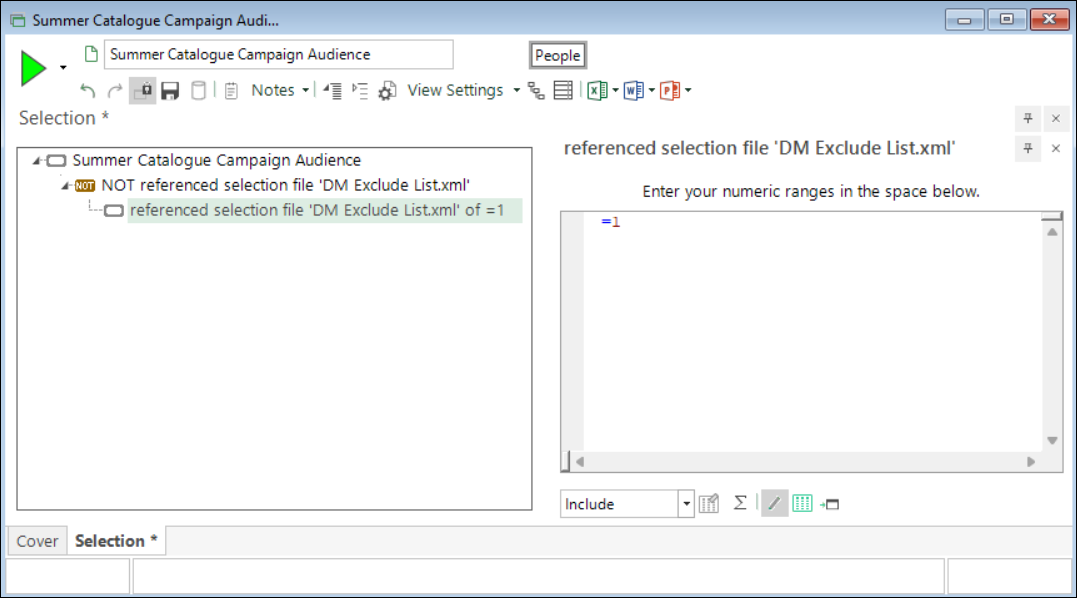
New functionality now allows you to add a saved .XML file by reference using the right‑drag context menu. With this approach, changes to the source selection are reflected in the new selection, as well as in any other selections that reference the same XML file.
You can use saved .XML selections by reference throughout your analysis, including in:
- Cube dimensions and measures
- Data grid columns
- Expression filters
- Virtual variable selections
They are particularly useful, for example, when you have aggregations with transactional filters, or exclusion groups shared across multiple analyses or campaigns, which need regular updating.
Note
The user is responsible for ensuring that the referenced file is not accidentally modified or deleted.
See How do I use a saved file in a selection?
New Pattern match time markers
Pattern‑matching transactional analysis has been extended with the introduction of time markers. Time markers allow you to look for defined behaviours that can occur at any point in a person's transactional history, provided they fall within a particular time period.
Example use cases include:
- Searching for a specific sequence of results in a particular set of time periods
- Identifying people who have one transaction per quarter for five successive quarters
- Analysing donors who made a one-off donation and later transitioned to a regular giving pattern
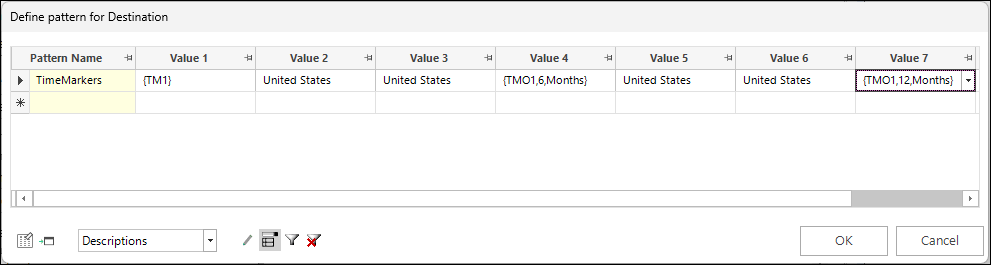
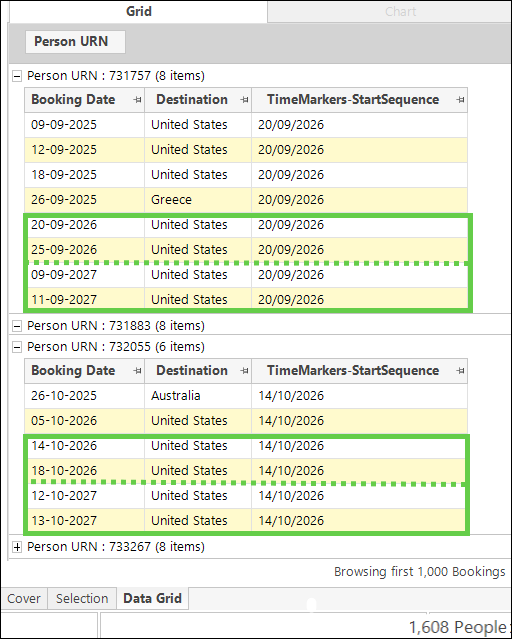
For example, to be selected based on the pattern above, a person must have exactly two United States holidays within a six-month period, followed by two more in the next six-month period. You can use a data grid to validate the results.
See Expressions: Aggregations on the fly - Pattern Match time markers.
New Best fit all columns for data grids
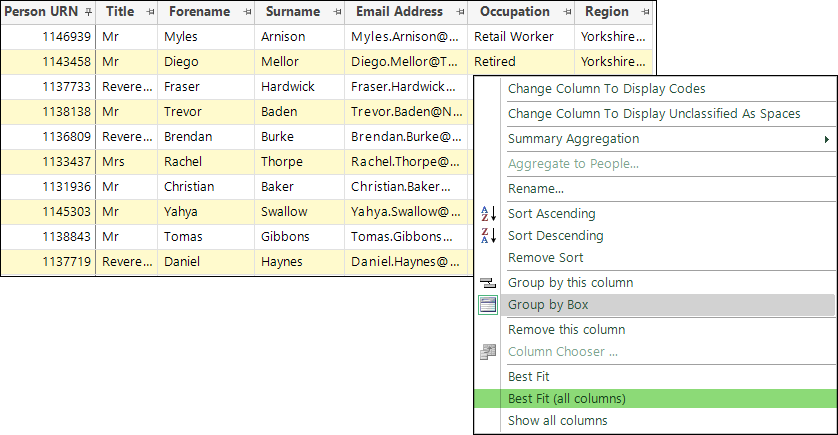
A new right-click context menu option has been added to data grid column headers. This option automatically resizes all columns so they best fit the data they contain.
New VarCode() expression function for selector variables
Returns the code for a selector variable category.
You can specify the category by:
- Description: To return the code for the category with the given description.
- Index number: To return the code at the specified index position.
Example:
This returns the code for the Product Code category with the description "Flight Only".
When used with a flag array variable, the final parameter can also be a numeric set. In this case, the function returns a delimited list of codes corresponding to the indexes in the set.
Improved CodeOf() second parameter option
Previously the CodeOf() expression accepted only one parameter and its output differed depending on the variable type:
- Flag arrays returned a text string of 0s and 1s indicating which flags were set.
- Arrays returned a delimited list of selected values.
You can now add an optional second parameter to make the output for flag arrays match the array format.
Example:
For the chosen records, this returns a delimited list of all the codes selected.
Behavioural modelling
The latest behavioural modelling developments are outlined below.
Improved Extended modelling selection scenarios
Behavioural modelling identifies groups of people who have historically exhibited a specific behaviour - for example, responding to a campaign. You can then analyse how a group's earlier behaviour differs from others, with the aim of predicting which additional people within your database are likely to behave similarly.
Previously, the behaviour being modelled had to involve an active event, such as a response. You can now also model inactive events - the absence of an action - and optionally follow this with any number of subsequent events.
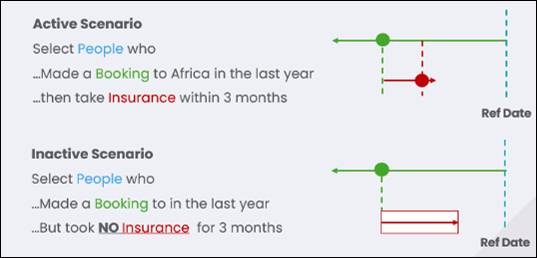
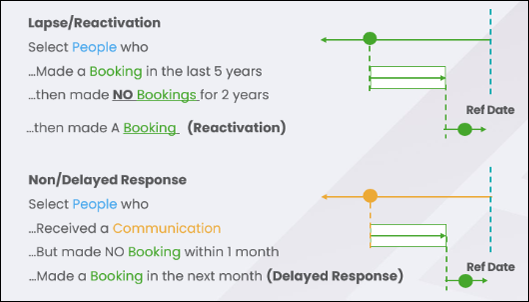
This enables new modelling scenarios to be modelled, including:
- Lapsing
- Reactivation
- Non-responses
- Delayed responses
FastStats can then identify people who are likely to exhibit these behaviours.
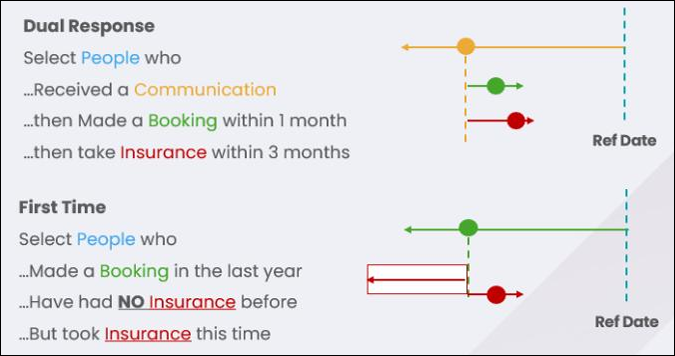
Event sequences are no longer limited to a single linear chain. You can now:
- Allow multiple events to follow the same event
- Define events as occurring before another event
This facilitates modelling of multiple or first-time response scenarios.
For details on set-up, implementation and limitations, see Behavioural modelling - scenarios.
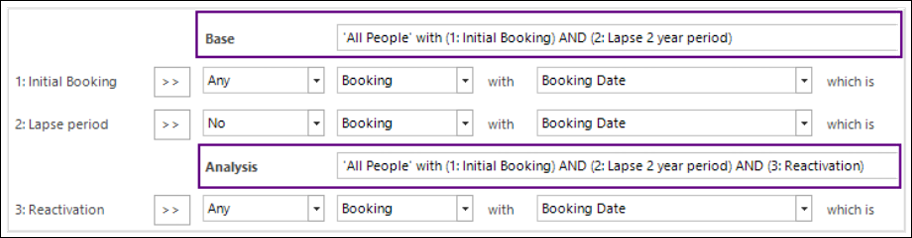
New Custom naming of events
You can now customise the names and descriptions of events used in event-driven selections.
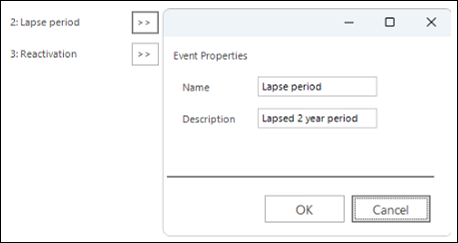
The default names applied to the analysis and base groups will automatically detect and apply these customised event names.
Improved Auto-generated selections
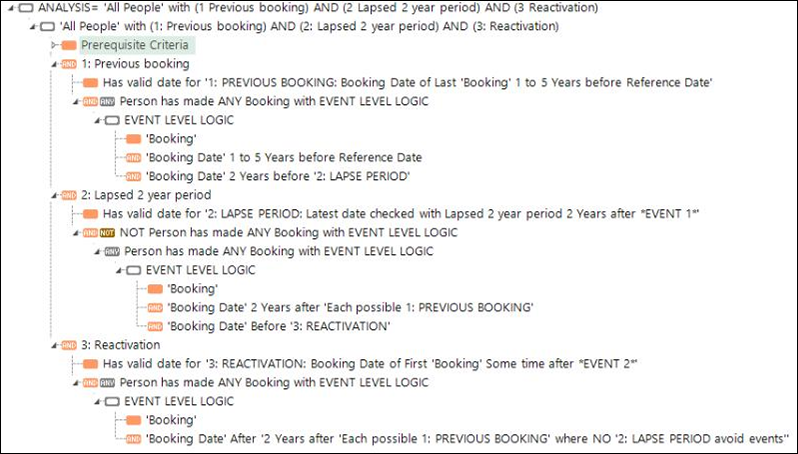
The sequence of events defined in a selection scenario is converted into a pair of selections that define the model profiles.
The definitions of the analysis and base selections have been updated to:
- Use complex expressions where needed to perform the selection
- Include placeholder (dummy) expressions to make the overall logic clear and readable
Improved Data grid options
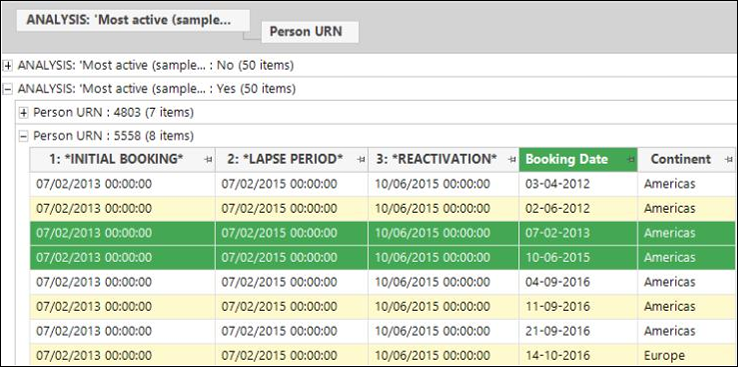
Data grid display options have been extended. You can now:
- Specify how many records to display for analysis and non-analysis groups
- Automatically extract and display any variable used in event criteria
- Set the data grid table level to one of the transaction tables
- Apply a transaction filter to limit records which are before the reference date
See Behavioural modelling updates.
General
New Multi-factor authentication
FastStats now supports multi-factor authentication (MFA) using one-time passcodes (OTPs). When you enable OTP, logging in requires both your password and a time-limited verification code generated by an authenticator app (such as Microsoft Authenticator or Google Authenticator). This protects your account against password theft, reuse, and brute-force attacks, since each code is valid for a single session only.
Any user can self-enrol by scanning a QR code from the Manage OTP option in Change Password. Recovery codes are generated at setup and should be stored securely. These allow you to log in if you lose access to your authenticator app. Administrators can force MFA at user, group, or system level, and can reset OTP for individual users if needed. Note that service accounts used for automated processes should not have OTP configured.
See Logging in to FastStats and Multi-factor authentication.
System improvements
Improved Scheduled tasks: virtual variable trigger
In FastStats, the Virtual Variables Updated event trigger for scheduled tasks now supports filtering to a single named virtual variable. Instead of triggering whenever you update any virtual variable, you can now specify which variable activates a given task.
This is useful when multiple virtual variables are in use and you need tasks to respond to changes in one specific variable only.
Note
If no variable is specified, the trigger behaves as before. If a variable is specified, the task only fires when that variable is updated, regardless of other variable activity. Each scheduled task supports one variable trigger, but you can create multiple tasks each targeting a different variable.
Improved Query optimisation defaults to level 3
The Apteco engine's query optimisation setting now defaults to level 3. This expands the scope of automatic optimisation to include RFV (Recency, Frequency, Value) calculations, in addition to standard queries and cube calculations that were already covered at lower optimisation levels.
This change takes effect automatically with no configuration required. If level 3 optimisation is not suitable for your environment, you can override this setting manually in the FastStats Configurator. When Override Optimisation Level is set to false (the default), the query optimisation level is automatically set to 3.
Bug fixes
- Wizards
- Fixed an issue when using the Combine Categories wizard by rule on a datetime variable resulted in an error.
- Expressions
- Fixed issues relating to Pattern Match aggregations
- Date unit periods should not be visible for category grouping
- Category grouping variable should be numeric only
- Grouping still visible for numeric patterns
- Better validation for order values in patterns where the user has edited the text
- Order datetime with units greater than days returned incorrect counts.
- Fixed issues relating to Pattern Match aggregations
For administrators
Administrators can enforce MFA at user, group, or system level, and reset OTP for individual users via user administration. Service accounts used for automated processes should not have OTP configured. See Multi-factor authentication with one-time passcodes for full details.
Q1 2026
25 March, 2026
Analysis
The following enhancements extend pattern match transactional analysis and sequence analysis capabilities.
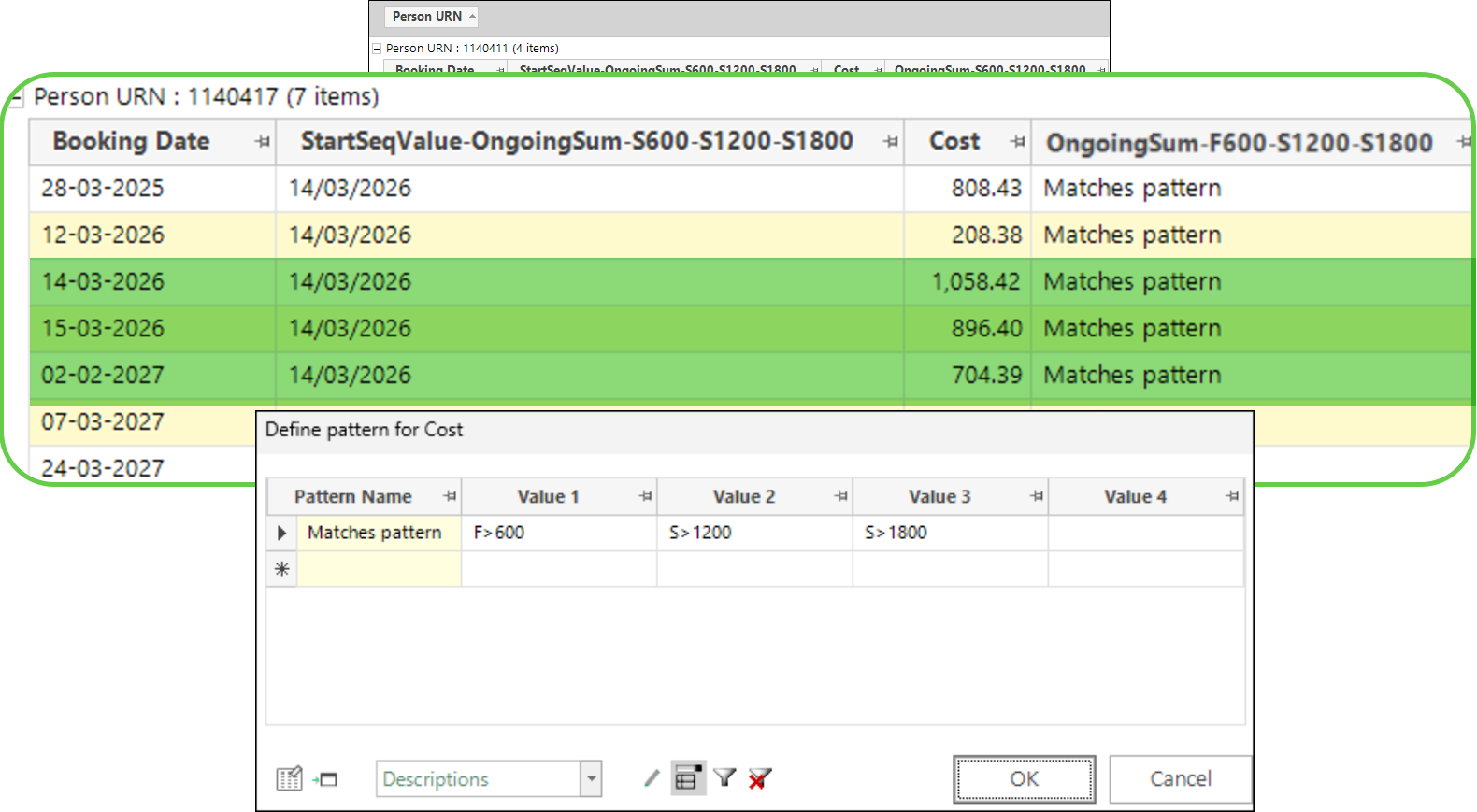
New Numeric patterns: ongoing sum and mean
In addition to defining numeric patterns that contain fixed (F), relative (R), or percentage difference (P) values, you can now additionally search for ongoing sum (S) and ongoing mean (M) values.
See Expressions: Aggregations on the fly - Pattern Match summary of positional wildcards
Improved Pattern match: extended time units
The ability to specify the minimum or maximum number of days between transactions in a pattern is extended to support other units of time — weeks, months, quarters, or years. This allows you to ensure an absolute interval between transactions and more accurately undertake analysis such as monthly repayments, or annual donations, for example.
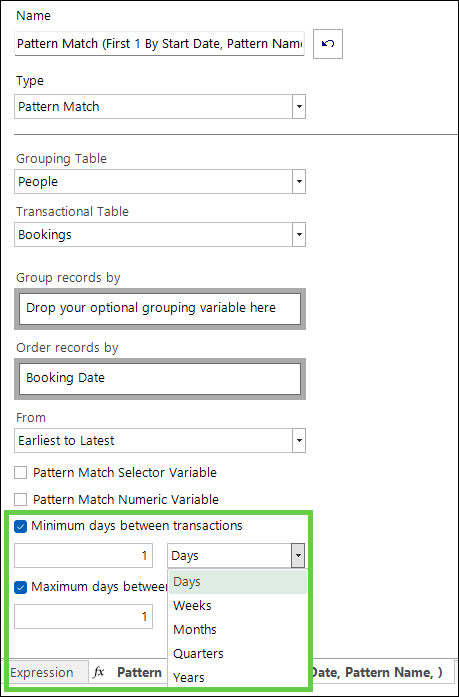
When working with datetime variables, the minimum and maximum options also include seconds, minutes and hours:
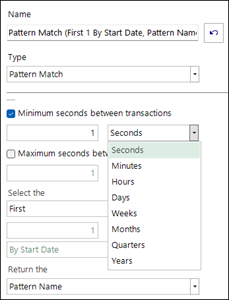
See Expressions: Aggregations on the fly - Pattern Match minimum / maximum number of days
Improved Pattern match UI improvements
Work has been completed to standardise and improve the language used within the user interface for Pattern Match aggregation expressions and the Sequence Analysis wizard.
New Category grouping: linear trend output
You can now select Linear Trend (slope) as an output function when creating a Category Grouping aggregation expression. For example, to help monitor customer engagement and the impact of marketing activities over time, a charity might examine the trend of annualised donation amounts, a retailer might review monthly product spend, and a rail company look at weekly travel expenditure.
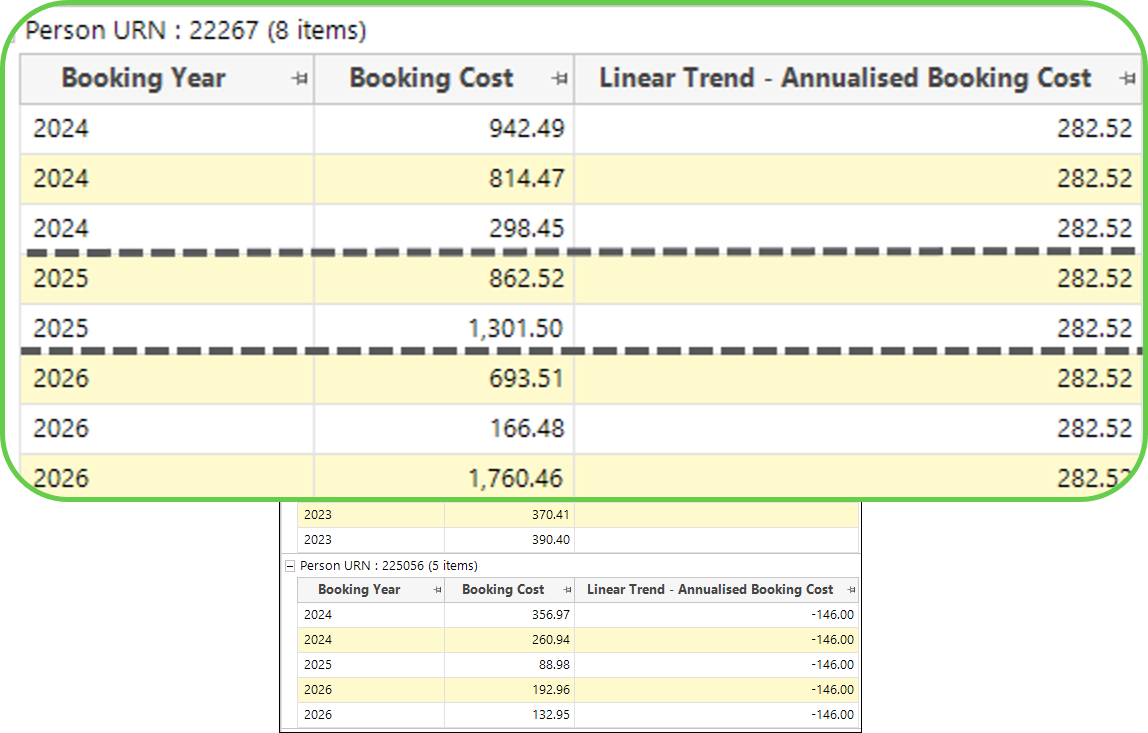
See Expressions: Aggregations on the fly - Category Grouping linear trend output function
Cubes
Two new options are accessed via the context menu displayed when right-clicking a cube column header.
New Show colours at small size
It is now possible to shrink the cells in a cube and display the thematic shading in a heat-map view. As well as allowing you to spot correlations in your data, combining appropriate thematic shading with this new option provides you with a very quick and accessible way to carry out data quality checks and spot cells which differ from expected, or perhaps indicate missing data. Also, when one of your two dimensions is an ordered variable, most typically a continuous time or date element, this view offers a mechanism for examining the seasonality of products. As with all cubes, cells of interest can be selected and dragged off for further review and analysis.
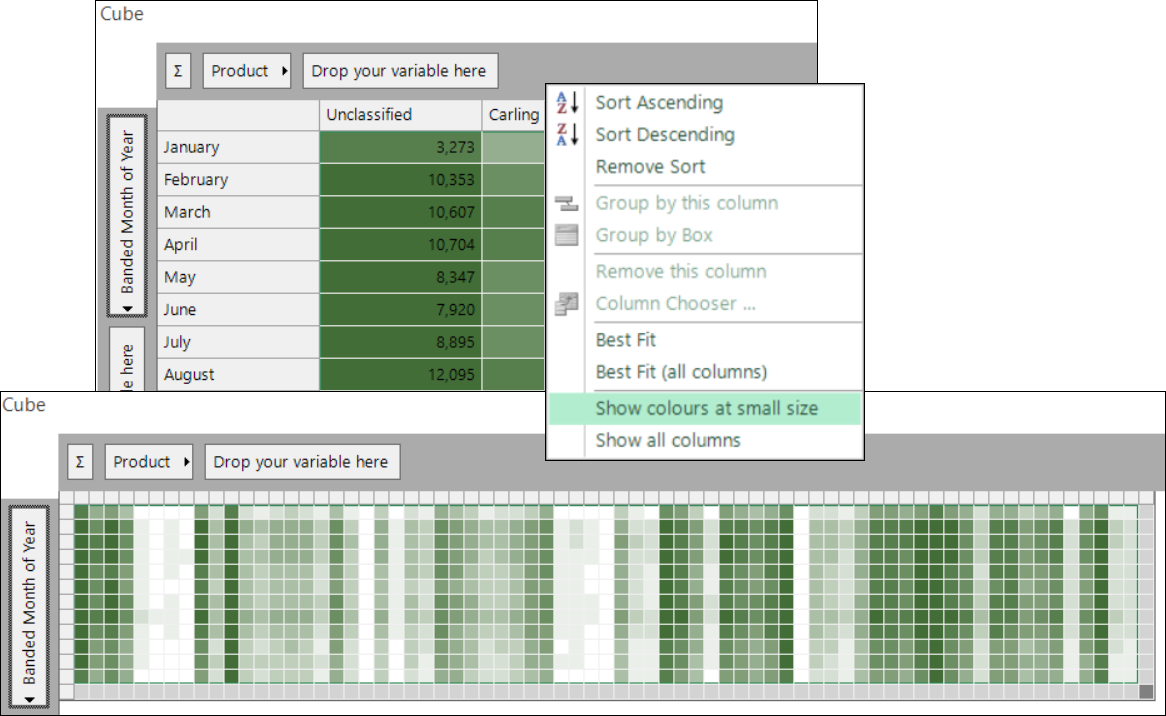
The heat-map view is available for analysis within the FastStats user interface and cannot be exported.
New Best fit (all columns)
For ease and convenience, you can now select to apply Best fit (all columns) to the cells displayed in a cube, rather than needing to set each column individually.
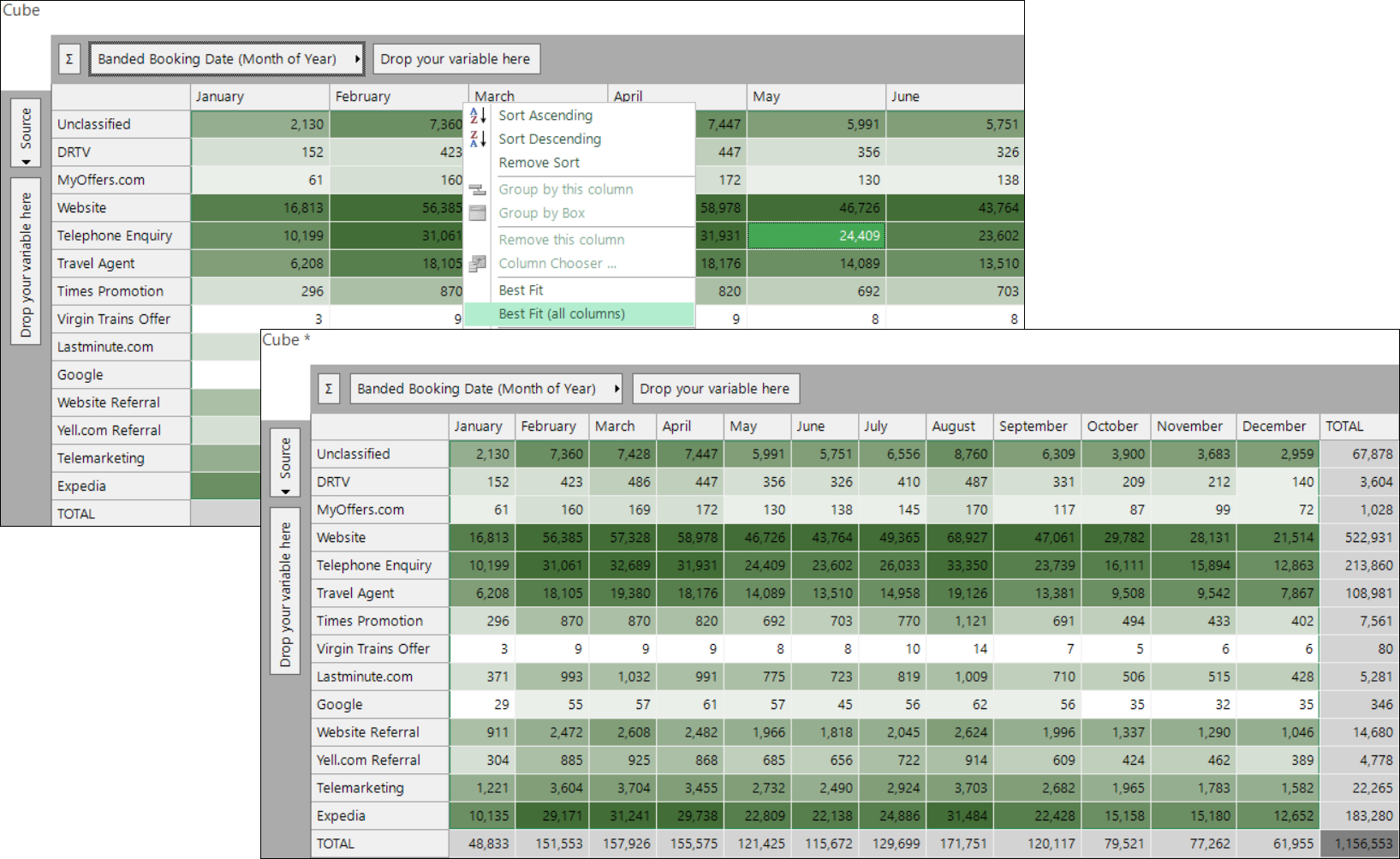
See Cubes
Modelling
Latest behavioural modelling developments are outlined below.
See Behavioural modelling updates
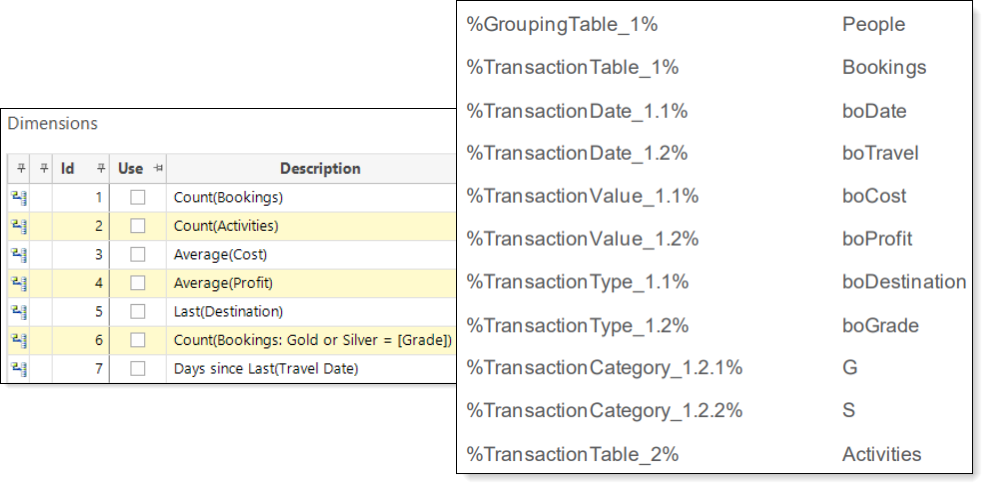
Improved Modelling templates: unlimited variables
The first and limited iteration of behavioural modelling templates in Q3 2025 is extended in this release and now allows you to template models which include dimensions using any number of variables from multiple transaction tables.
Note
Work is ongoing to make behavioural modelling templates available in Apteco Orbit. Until then, experienced FastStats users can access and use this functionality through the FastStats Modelling Environment. Please note that both the features and the user interface in this release are still being developed and will continue to improve in future updates.
Improved Transactional preview
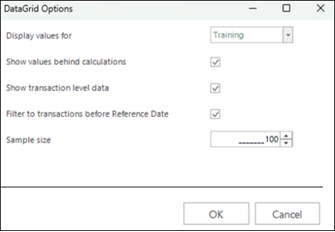
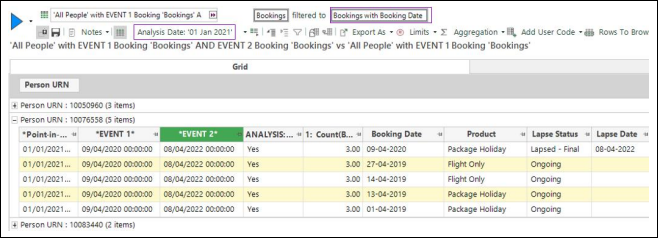
In the Modelling Environment, the ability to create a data grid, and examine records relating to behavioural features in more detail, is extended to allow the automatic inclusion of transactional data, and to choose a sample size. The data grid launches at the transactional level with the analysis date set to the training date used in the model. The addition of a transactional filter restricts the transactions shown to only those before this date, although you can adjust the filter manually to capture relevant transactions after this date, if required.
New Inclusive point-in-time
When defining a behavioural feature with a time frame which runs adjacent to the nominated point-in-time, you can now optionally select to include that point-in-time so that transactions on the day of the event are captured. This can be particularly impactful, for example, on a charity system where many people lapse after a single donation.
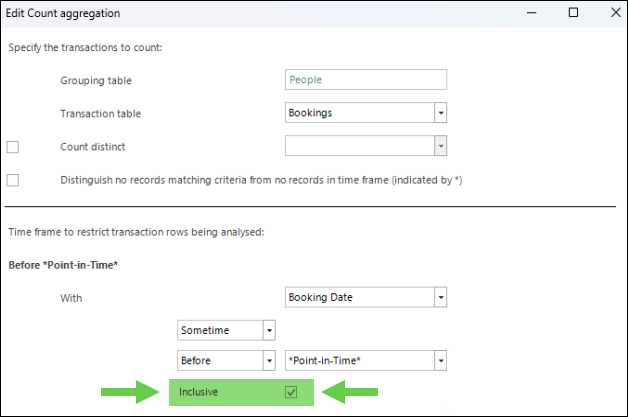
Improved Flexible event-driven model definition
When defining an event-driven modelling scenario, set-up requires you to select a point-in-time which determines the transactions used when assessing the behaviour of, and looking for differences to explain, those in the analysis selection. To avoid potential misinterpretation of differences in behaviour caused by the scenario definition rather than the differences being predictive, for cases where the analysis event was explicitly after the reference date, you could only set the point-in-time to be the reference date. To provide greater flexibility, you can now choose your point-in-time in all cases, but you are prompted in scenarios where caution is necessary.
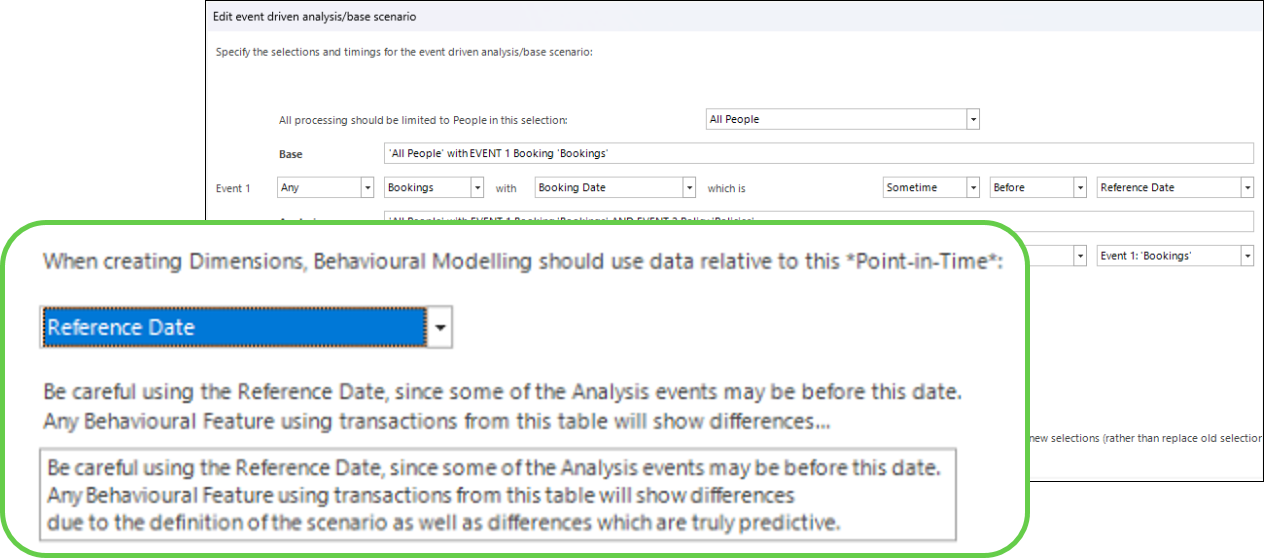
This is of particular significance when creating a churn model.
Improved Flexible fixed-date behavioural models
The range of selections that you can use for fixed-date behavioural models is now consistent with those that are possible when using events.
System improvements
Improved Query engine optimisations enabled by default
The FastStats query engine now runs with all performance optimisations enabled by default, which improves the speed of counting operations across all Apteco systems. The system automatically applies optimisation level 2 without requiring manual configuration.
- When Override Optimisation Level is set to false (default), the query optimisation level is automatically set to 2, enabling optimisations without manual configuration.
- When set to true, you can manually specify the optimisation level.
New OAuth 2.0 for SMTP
The FastStats Service now supports OAuth 2.0 authentication for SMTP, ensuring continued delivery of administrative emails as Microsoft deprecates Basic Authentication for Exchange Online. You must upgrade to this release and update your SMTP settings in the FastStats Service if you use Exchange Online for email delivery.
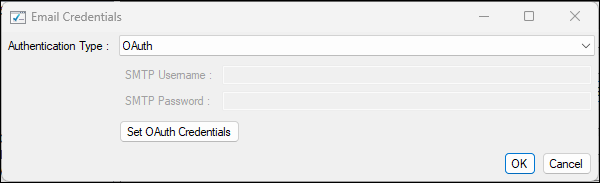
The FastStats Web Service now uses the FastStats Service to send emails, which simplifies configuration by removing the need to maintain duplicate SMTP credentials across multiple services.
Note
Although this change is currently required only for Exchange Online customers, other SMTP providers are expected to deprecate Basic Authentication in the future.
New System Explorer auto-refresh on login
You can now configure FastStats to automatically refresh the System Explorer when you log in, ensuring you always see the latest variables and system hierarchy without manually refreshing each time.
Improved UTF-8 filename support in remote paths
You can now use UTF-8 characters such as umlauts, carets, and cedillas in remote file paths, which improves support for international character sets in file locations.
Bug fixes
- Wizards
- Fixed an issue so that selections containing expressions, used with the Create & Update wizard, correctly display the variable description and not the variable reference.
- Expressions
- The rank coefficient calculation in the FastStats fs32svr has been corrected to omit missing date values.
- Fixed an issue where right-dragging a non-date expression onto a data grid incorrectly opened the start/end year date dialogue.
- Fixed an issue where the Rank on the fly aggregation ordering language displayed an incorrect table name.
For administrators
If you use Exchange Online for SMTP email delivery, you must upgrade to this release and update your SMTP settings in the FastStats Service. Microsoft is deprecating Basic Authentication for Exchange Online. See OAuth 2.0 for SMTP for configuration details.