Minimum/maximum number of days
When creating a Pattern Match aggregation expression you can optionally specify a minimum and/or maximum number of days between transactions.
The introduction of additional time units lets you define an exact interval between transactions and improves analysis - such as tracking recurring annual donations, or monthly repayments, for example.
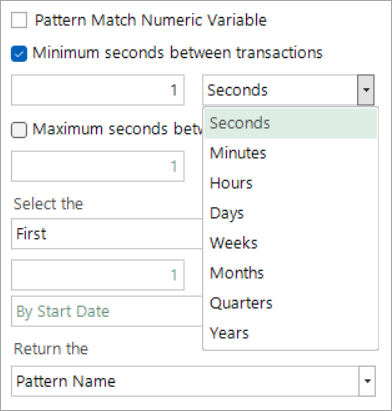
When working with datetime variables, the minimum and maximum options also include seconds, minutes and hours.
Simply select the required unit from the drop-down menu options.
Maximum days between transactions
This allows you to ensure that any gap between transactions is not too long. For example, in the context of a Holidays company, setting the maximum days between transactions to 400, approximates to a person's annual holiday.
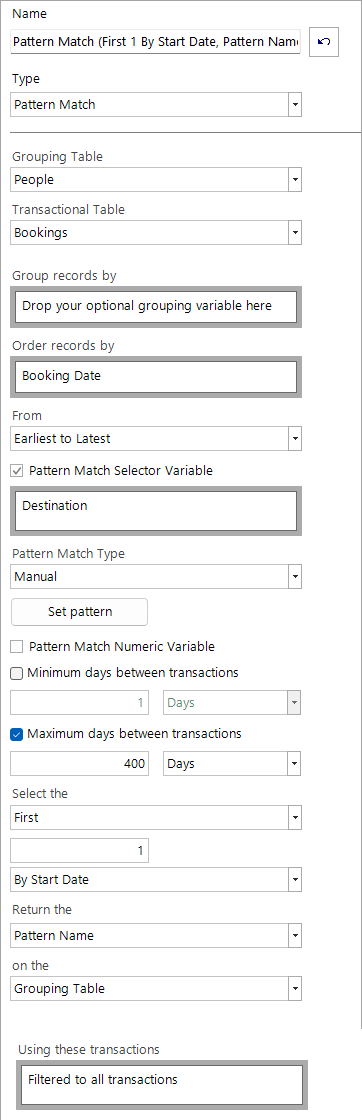
Minimum days between transactions
Setting a minimum number of days between transactions facilitates analysis where you require a minimum time period between transactions. For example, Min = 1 would ensure that transactions don't occur on the same day, whilst Min = 90 would return transactions with at least 90 days between them.
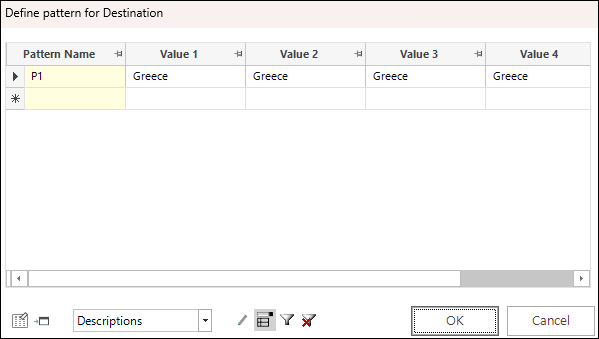
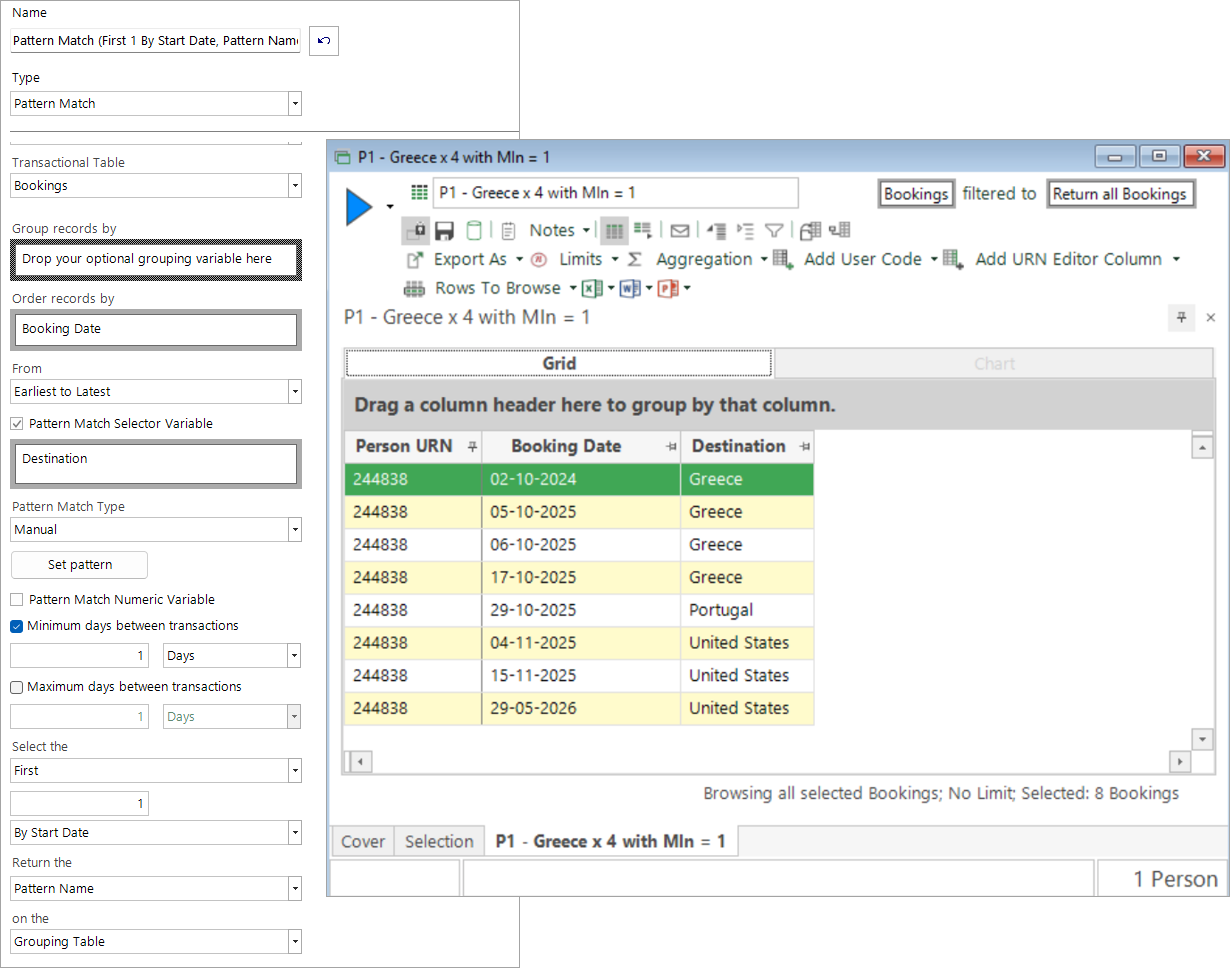
In the example below, the pattern match is manually defined as 4 holiday bookings to Greece.
With no minimum or maximum number of days defined, 2 people are identified as matching the criteria:
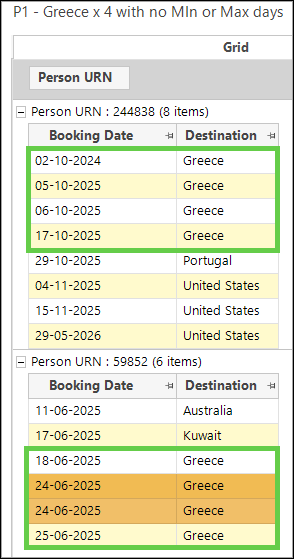
Note that Person URN 59852 has two bookings made on 24th June 2025. If, however, the minimum days between transactions is set to 1, this record is no longer returned in the results:
Using minimum and maximum together
You can use the minimum and maximum number of days together when defining a pattern. For example, setting both to 30 ensures that there are exactly 30 days between transactions.
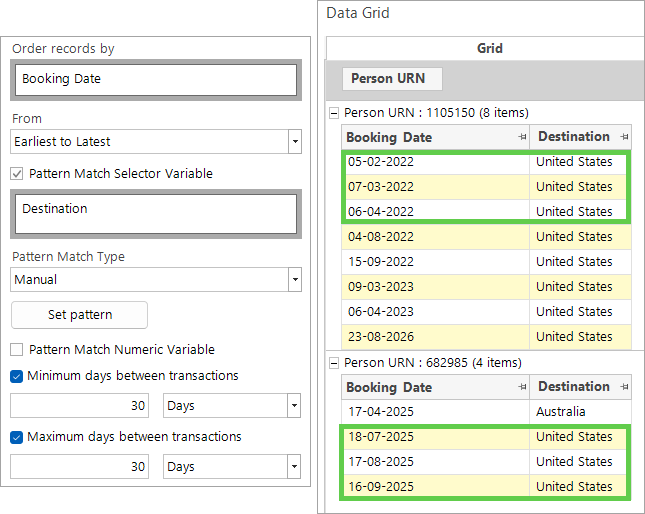
The data grid above displays the results of a manually defined pattern looking for 3 holiday bookings to the United States with exactly 30 days between them.
Below, by setting minimum to 300 and maximum to 400 days, you define a pattern that returns people with 3 holiday bookings to the United States booked approximately annually.
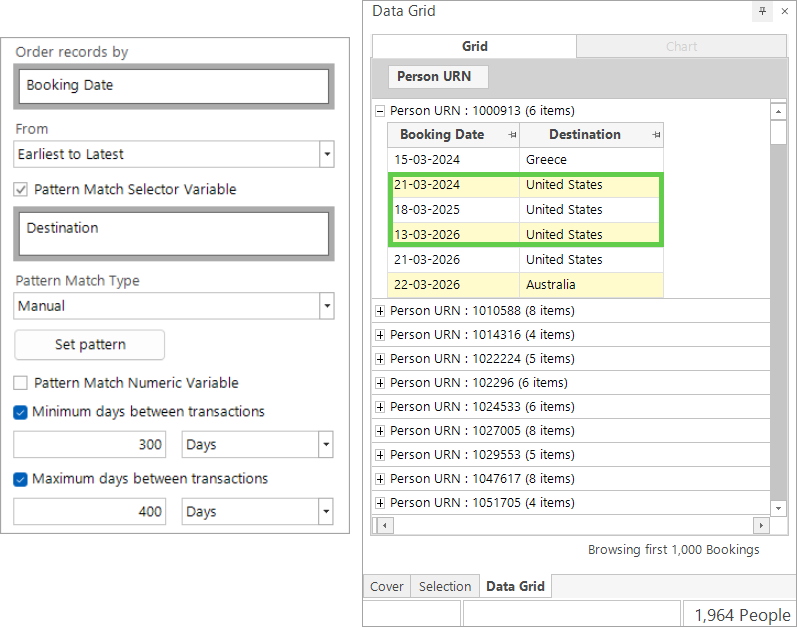
Here FastStats finds and returns 1,964 people who meet the criteria.