Basket analysis wizard
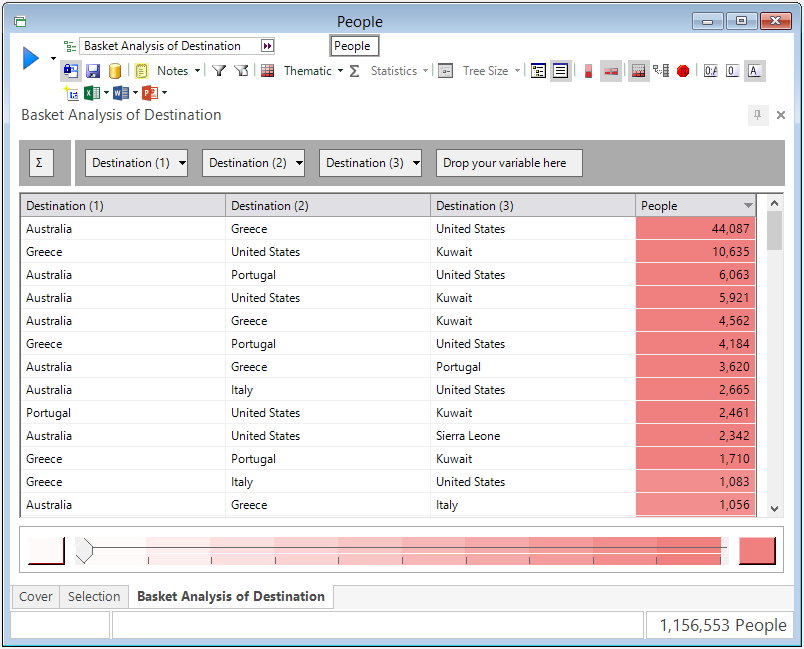
This Basket Analysis Wizard is very similar to the Transaction Analysis Wizard, except that it treats all transactions for a particular Grouping record as unsequenced and analyses all combinations of transactions. This can be useful to show how common different sets of transactions are for each Grouping record.
N.B. This wizard does not create a Virtual Variable, but a Tree display of the results.
On the Wizard tab click on the Basket Analysis link to start the wizard.
Pick selection
The Basket Analysis can be performed for only a certain set of records. Drop the selection defining those records onto the "Drop your selection here" drop box. If you would like to analysis all the data in the FastStats system then don't drop anything on the drop box and the data universe will be analysed.
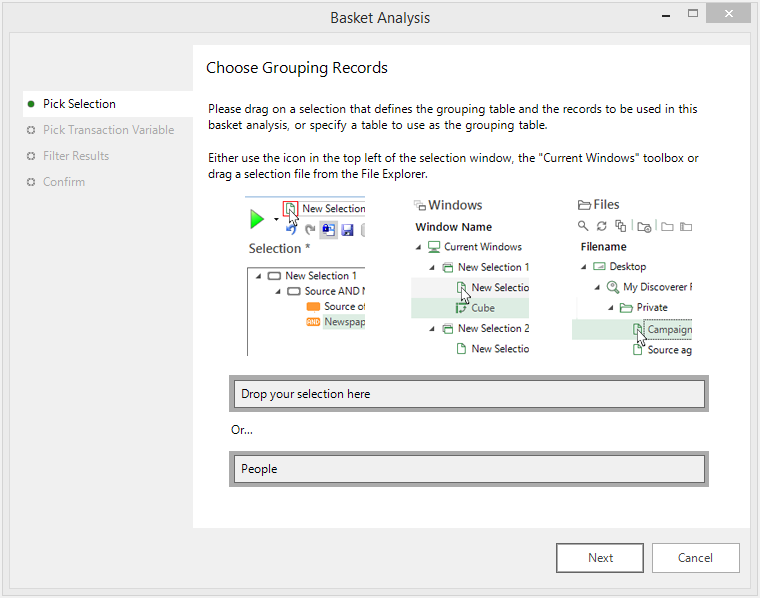
Drop the selection defining those records onto theDrop your selection here drop box.
If you want to analyse the whole universe right click on the second box and select the table level at which you want to do the analysis.
By default, the analysis will be done on the default table.
Pick transaction variable
You must then specify which variable you will analyze. This will have to be a Selector variable from a Transaction table.
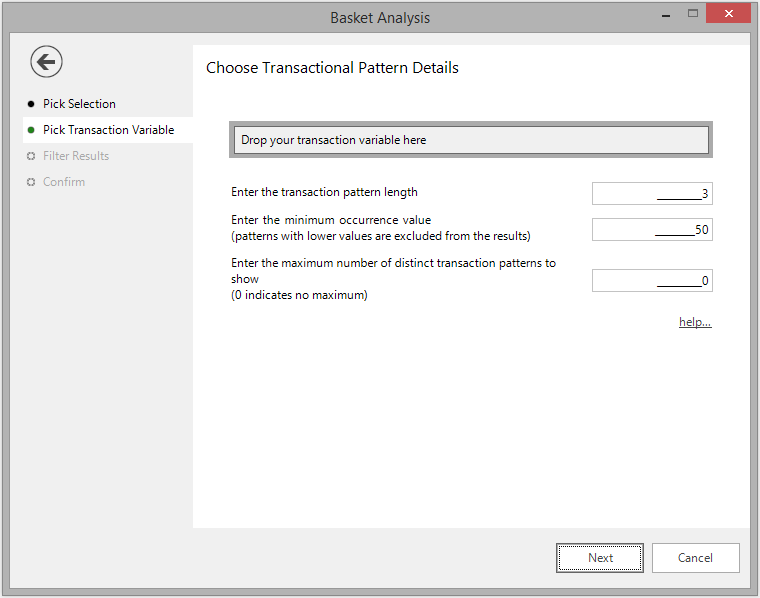
As with the Transaction Analysis Wizard, you can also specify some other options.
Transaction pattern length
This is the number of transactions in a row to analyse. The default value of 3 will mean that the FastStats server will look for patterns of 3 Transactions in a row. The results will then be presented as 3 transaction values and a count for the number of times the pattern occurred. For example if the transaction variable is Holiday Destination and the transaction pattern length is 3 then the results might look like:
- USA, USA, USA - 109,501
- Germany, Germany, Germany - 42,113
- USA, USA, Australia - 38,366
Unlike the Transaction Analysis Wizard where transactions are analyzed in sequence, the Basket Analysis wizard analyzes all combinations of transactions. Therefore if a person took the following holidays:
- France
- Germany
- UK
- Spain
Then the patterns that would be analyzed for that person would be:
- France, Germany, UK
- France, UK, Spain
- France, Germany, Spain
- Germany, UK, Spain
Also notice that since the order of the patterns is not important, "France, Germany, UK" and "France, UK, Germany" are not considered separate patterns.
Minimum occurrence value
This value is used to remove infrequent patterns from the results. If a patten (such as "France, Jamaica, Iran") occurs fewer times than the minimum occurrence value then it will not be included in the results.
Maximum distinct patterns
Another way of reducing the number of results to show is to set the maximum distinct patterns value. If this is set to a value other than 0 then the wizard will return the top n values.
Filter results
You can optionally specify a filter query so that the analysis is only done on some of the transaction records. Note that this query must have the same resolve table as the transaction variable specified in the previous step.
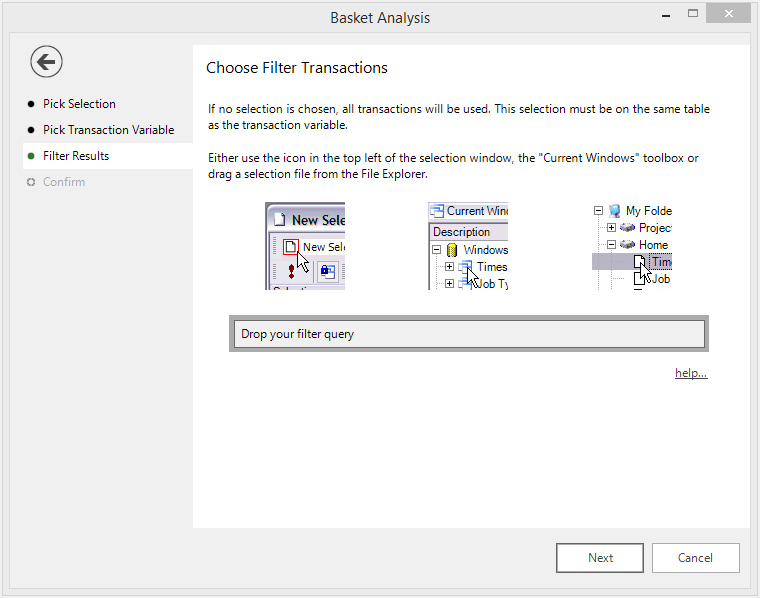
This process is the same as for the Transaction Analysis Wizard.
For example, you might want to analyse the holiday destination patterns for all people that live in London where their booking was a flight only product. You would perform the analysis on the Person table, using the Booking Destination variable.
To only include the people that live in London in your analysis you would create a selection of all people that live in London (ensuring that this query's resolve table is set to People) and drag it on to Pick Selection of the wizard.
However this will still return destinations for all product types (flight only, accommodation only and package) for those people. To filter what type of transaction is included in the analysis, create a new selection on the holiday table of product type of flight only. Then drag this selection onto the "Drop your filter query" drop box.
This will then give you an analysis of the pattern of flight only booking destinations that each person that lives in London has been to.
Confirm
The final screen of the wizard shows the options that have been chosen.
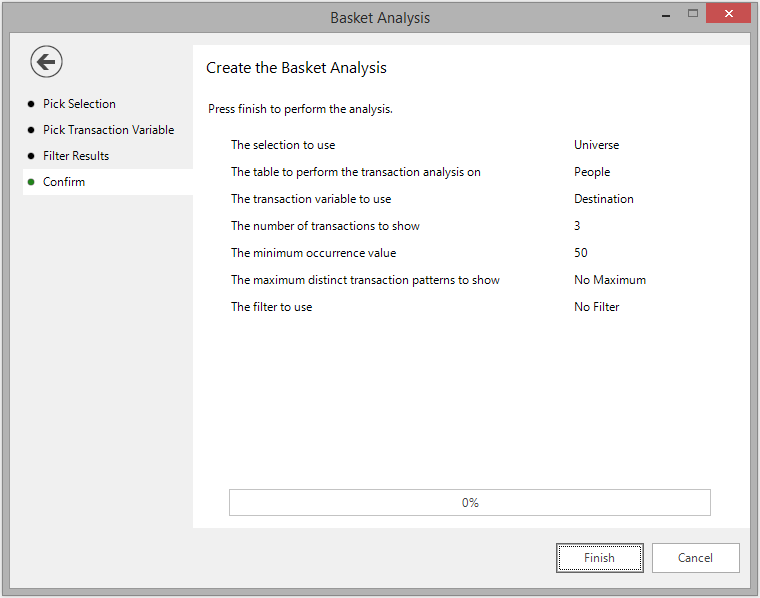
Click the Finish button to perform the analysis and create the results (shown below).
The results are displayed in a Tree and can be manipulated in the normal way.